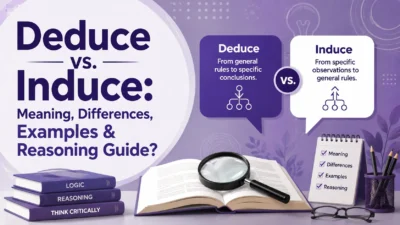
Alternative Of, Alternative For, or Alternative To can confuse English learners because these expressions aren’t always interchangeable. In modern English grammar, the preposition after alternative affects meaning and word usage. Alternative to is the most standard and common expression, while alternative for fits certain contexts. Alternative of is less common and often sounds unnatural. Using the right prepositions improves writing quality, sentence clarity, and correct usage.
The main distinction involves choice, meaning, and context. Correct preposition use helps avoid ambiguity, confusion, common grammar mistakes, and grammar errors. English grammar, grammatical correctness, word choice, usage differences, contextual meaning, and semantic distinction all help writers communicate more clearly and professionally.
For intermediate learners, understanding grammatical usage, practical usage, and expression choice makes writing more accurate. It also improves linguistic accuracy, writing accuracy, professional language, sentence construction, and effective communication. With language learning, grammar rules, and real examples, learners can develop natural writing, clear writing, and understandable writing.
Quick Answer: Alternative To vs Alternative For vs Alternative Of
| Expression | Main meaning | Example |
| Alternative to | Another option instead of something | Tea is an alternative to coffee. |
| Alternative for | An option intended for someone or something | We need an alternative for customers. |
| Alternative of | Rare for the replacement meaning | Usually use alternative to |
The easiest rule is:
Use “alternative to” for the thing being replaced and “alternative for” for the person, situation, or purpose being served.
What Does “Alternative” Mean?
An alternative is another choice, possibility, method, or course of action. It usually appears when two or more options exist.
For example:
We need an alternative to the current plan.
Here, the alternative is another plan that could replace the current one.
Alternative as a Noun
As a noun, alternative means another option.
Examples:
- We need an alternative to this product.
- There are several alternatives.
- The only alternative is to wait.
- Is there an alternative to driving?
The noun commonly appears with to when you identify the option it replaces or contrasts with.
Alternative as an Adjective
Alternative can also describe something different from the usual method or choice.
Examples include:
- alternative approach
- alternative method
- alternative solution
- alternative energy
- alternative route
For example:
The researchers considered an alternative method.
Here, alternative directly modifies method, so no preposition is needed.
When to Use “Alternative To”
Alternative To for Replacements
Use alternative to when one thing can replace another.
The basic structure is:
alternative to + thing being replaced
Examples:
- Solar energy is an alternative to fossil fuels.
- We need an alternative to plastic.
- This software is an alternative to the older system.
- Cycling is an alternative to driving.
This is the most common and useful construction.
Alternative To for Different Choices
The two things don’t have to be exact substitutes. An alternative can simply provide another way to achieve a goal.
For example:
Negotiation is an alternative to litigation.
Negotiation and litigation are different approaches, but both can be used to resolve a dispute.
Other examples include:
- Online learning is an alternative to classroom learning.
- Walking is an alternative to taking the bus.
- A digital form is an alternative to a printed document.
Alternative To + Gerund
A useful grammar pattern is:
alternative to + verb-ing
Examples:
- an alternative to driving
- an alternative to waiting
- an alternative to buying
- an alternative to working late
In these sentences, to is a preposition. That’s why it is followed by the -ing form, not the base verb.
Correct:
We need an alternative to driving.
Incorrect:
We need an alternative to drive.
When to Use “Alternative For”
Alternative For a Person or Group
Use alternative for when you identify the person or group an option is designed to help.
For example:
The company created an alternative for customers who don’t use smartphones.
The customers aren’t being replaced. The alternative is intended for them.
More examples:
- The school offers an alternative for students who work full-time.
- The restaurant provides an alternative for vegetarian customers.
- The program offers an alternative for families with limited budgets.
Alternative For a Situation or Purpose
For can also identify a situation or purpose.
Examples:
- We need an alternative for rainy days.
- The company developed an alternative for small businesses.
- This is a useful alternative for emergency situations.
Compare:
We need an alternative to the current system.
The current system could be replaced.
We need an alternative for employees who can’t use the current system.
The employees are the people the alternative is designed to serve.
That’s the key difference.
Is “Alternative Of” Correct?
Why “Alternative Of” Usually Sounds Unnatural
When you mean another option instead of something, standard English generally uses alternative to, not alternative of.
Incorrect or awkward:
We need an alternative of plastic.
Better:
We need an alternative to plastic.
Another example:
Is there an alternative to using plastic?
This is the natural construction when alternative means another choice.
Can “Of” Ever Appear With “Alternative”?
Yes. The words alternative and of can appear together in some grammatical structures. However, that doesn’t make alternative of a general replacement for alternative to.
For example:
The alternative of doing nothing was unacceptable.
This has a different grammatical structure from:
We need an alternative to this method.
For everyday writing, don’t force alternative of into sentences where you mean “instead of.”
Better Ways to Rewrite “Alternative Of”
| Awkward wording | Better wording |
| an alternative of plastic | an alternative to plastic |
| an alternative of driving | an alternative to driving |
| an alternative of the old system | an alternative to the old system |
| an alternative of traditional methods | an alternative to traditional methods |
Alternative To vs Alternative For
The difference becomes simple when you ask what the preposition describes.
| Phrase | What it identifies | Example |
| alternative to | The thing being replaced | an alternative to gasoline |
| alternative for | The person or situation being served | an alternative for customers |
| alternative of | Usually not used for replacement | Prefer alternative to |
Consider these examples:
We need an alternative to our current supplier.
The new supplier could replace the current supplier.
We need an alternative for customers affected by the supplier change.
The alternative is intended to help those customers.
The preposition changes the focus.
Alternative To vs Substitute For
Alternative and substitute have similar meanings, but they’re not identical.
An alternative to is another possible choice.
Cycling is an alternative to driving.
A substitute for is something that takes the place of another thing.
Yogurt is a substitute for sour cream.
Think of it this way:
Alternative = another choice.
Substitute = something that stands in for another thing.
| Word | Common pattern | Meaning |
| Alternative | alternative to | Another possible choice |
| Substitute | substitute for | Something that replaces another |
Common Mistakes With “Alternative”
Using “Alternative Of” for Replacement
If you mean instead of, use alternative to.
❌ an alternative of gasoline
✅ an alternative to gasoline
Using “Alternative For” When You Mean Replacement
If you’re talking about something that can replace another thing, alternative to is normally better.
We need an alternative to this software.
But if you’re talking about the users who need another option, alternative for works:
We need an alternative for employees who can’t use this software.
Assuming “Alternative” Always Needs a Preposition
It doesn’t.
You can simply say:
- There are several alternatives.
- We considered three alternatives.
- The only alternative is to wait.
Real-World Examples
Everyday Examples
- Tea is an alternative to coffee.
- Walking is an alternative to driving.
- We need an alternative to this expensive service.
Business Examples
- The company is searching for an alternative to its current supplier.
- The new payment method is an alternative to bank transfers.
- The business created an alternative for customers who prefer phone support.
Academic Examples
- The researchers examined an alternative to the traditional method.
- Online learning provides an alternative to classroom instruction.
- The professor offered an alternative for students who couldn’t attend.
Professional Writing Examples
Instead of:
We should consider an alternative of the current process.
Write:
We should consider an alternative to the current process.
Instead of:
The company needs an alternative for its outdated software.
If you mean replacement, write:
The company needs an alternative to its outdated software.
American English vs British English
There isn’t a major difference between American and British English when using alternative to.
Both varieties commonly use alternative to to describe another option or replacement.
American English does have some differences involving alternative and alternate in certain contexts. However, those differences don’t change the main rule for this topic.
For standard writing, alternative to remains the safest choice when you mean “another option instead of something.”
Conclusion
Choosing between alternative of, alternative for, and alternative to becomes easier when you focus on the meaning and context. In most cases, alternative to is the natural and standard choice. Alternative for can work when referring to a substitute for a person, thing, or situation, while alternative of is uncommon. Understanding these patterns helps you avoid grammar mistakes and write clearer, more professional English.
FAQs
Q1. Is “alternative to” grammatically correct?
Yes. Alternative to is grammatically correct and is the most common expression in standard English.
Q2. Is “alternative for” correct?
Yes, alternative for can be correct in specific contexts, especially when identifying a substitute for someone or something.
Q3. Is “alternative of” correct?
Alternative of is uncommon in modern English and often sounds unnatural. In most situations, alternative to is preferred.
Q4. Which is more common: “alternative to” or “alternative for”?
Alternative to is much more common and generally the safer choice in everyday and professional writing.
Q5. What does “alternative to” mean?
Alternative to means another option, choice, or solution that can replace something.
Q6. Can “alternative” be used without a preposition?
Yes. For example, you can say, “We need an alternative.” The specific preposition depends on the sentence structure.
Q7. What is the plural of “alternative”?
The plural is alternatives. For example, “We considered several alternatives.”
Q8. Is “alternative to” followed by a noun?
Usually, yes. For example: “This product is an alternative to traditional medicine.”
Q9. Why is “alternative of” usually avoided?
It isn’t the usual modern English pattern. Alternative to normally expresses the idea of another option or replacement more naturally.
Q10. How can I remember which preposition to use?
A simple rule is to remember alternative to as your default choice. Check the context before using alternative for, and generally avoid alternative of unless a specific construction requires it.